Integrated School Academy Data & Examination Information System
A comprehensive digital solution for managing student academic data, examination marks, rankings, and performance analytics with real-time notifications.
The Integrated School Academy Data and Examination Information System (IAIS) is designed to digitize and streamline the management of student examination data, marks, and academic performance analytics within school environments.
Traditional school systems rely heavily on manual processes for managing student data and examination results, leading to inefficiencies. IAIS provides a modern, role-based digital platform to automate these critical academic processes.
Managing student examination data manually in schools creates significant challenges that impact both educators and students.
Paper-based mark entry leads to frequent data entry mistakes, miscalculations, and lost records affecting student outcomes.
Without digital systems, schools lack the ability to generate insights, identify performance trends, or create meaningful reports.
Tracking individual student progress across subjects, terms, and years becomes extremely difficult without centralized management.
Teachers spend excessive hours on administrative tasks like mark calculation, ranking, and report generation instead of teaching.
IAIS provides a comprehensive, role-based digital platform that transforms how schools manage academic data and examinations.
All examination marks are stored in a single, secure database accessible by authorized users based on their roles.
Instant push notifications keep students, parents, and teachers informed about exam results, announcements, and updates.
Advanced analytics with filtering and ranking capabilities help identify trends and support data-driven academic decisions.
Generate comprehensive student reports, class summaries, and performance comparisons with a single click.
Powerful tools designed to streamline every aspect of school examination management.
JWT-based authentication with role-based access control for Admin, Teacher, Student & Parent.
Automated student ranking system with filtering by class, subject, term, and custom criteria.
One-click comprehensive reports with performance charts, grade summaries, and export options.
Cross-platform React Native mobile application for on-the-go access to marks and results.
Complete user lifecycle management with role assignment, profile management, and access control.
Streamlined mark entry, editing, and validation with bulk upload support for teachers.
Real-time push notifications for exam results, announcements, and important academic updates.
Interactive dashboards with visual charts showing performance trends and comparative analysis.
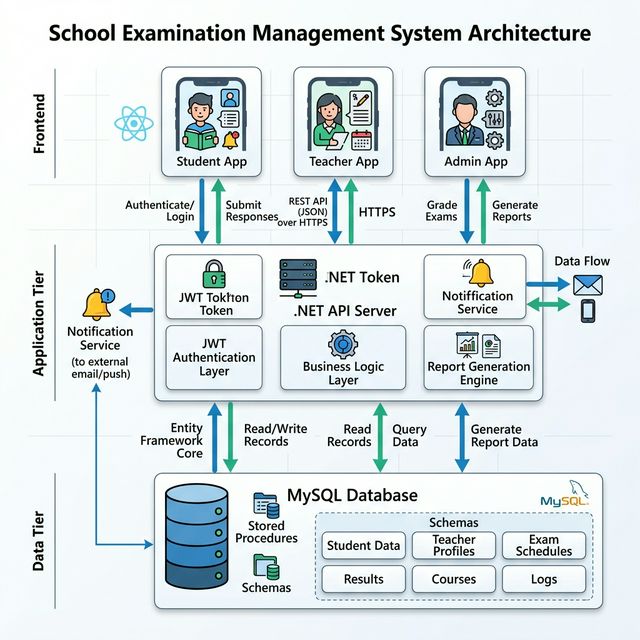
A robust three-tier architecture ensuring scalability, security, and performance.
Modern, industry-standard technologies powering every layer of the system.
Cross-platform mobile application development for iOS and Android with native performance.
Robust RESTful API built with ASP.NET Core, providing secure and scalable backend services.
Reliable relational database management system for structured academic data storage.
JSON Web Token based authentication ensuring secure, stateless user verification and authorization.
| Layer | Technology | Purpose |
|---|---|---|
| Frontend | React Native | Cross-platform mobile application |
| Backend | ASP.NET Core (C#) | RESTful API & Business Logic |
| Database | MySQL | Data storage & management |
| Auth | JWT | Secure authentication tokens |
| Tools | Git, VS Code, Postman | Version control & API testing |
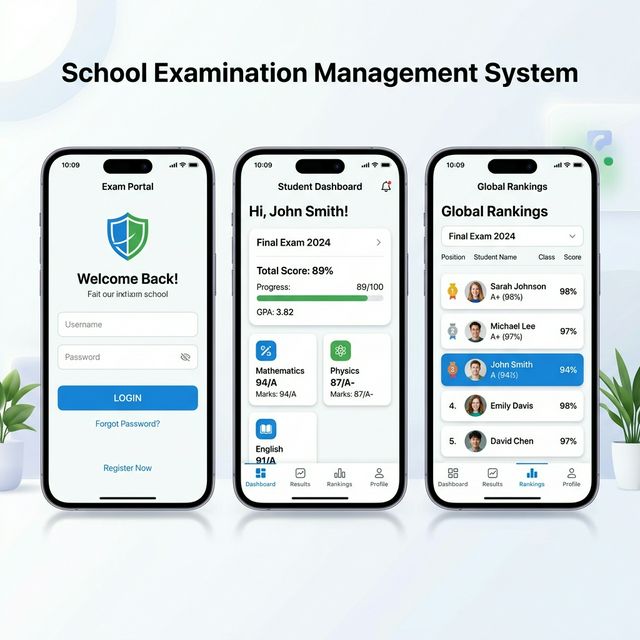
Modern, intuitive mobile interfaces designed for a seamless user experience across all roles.
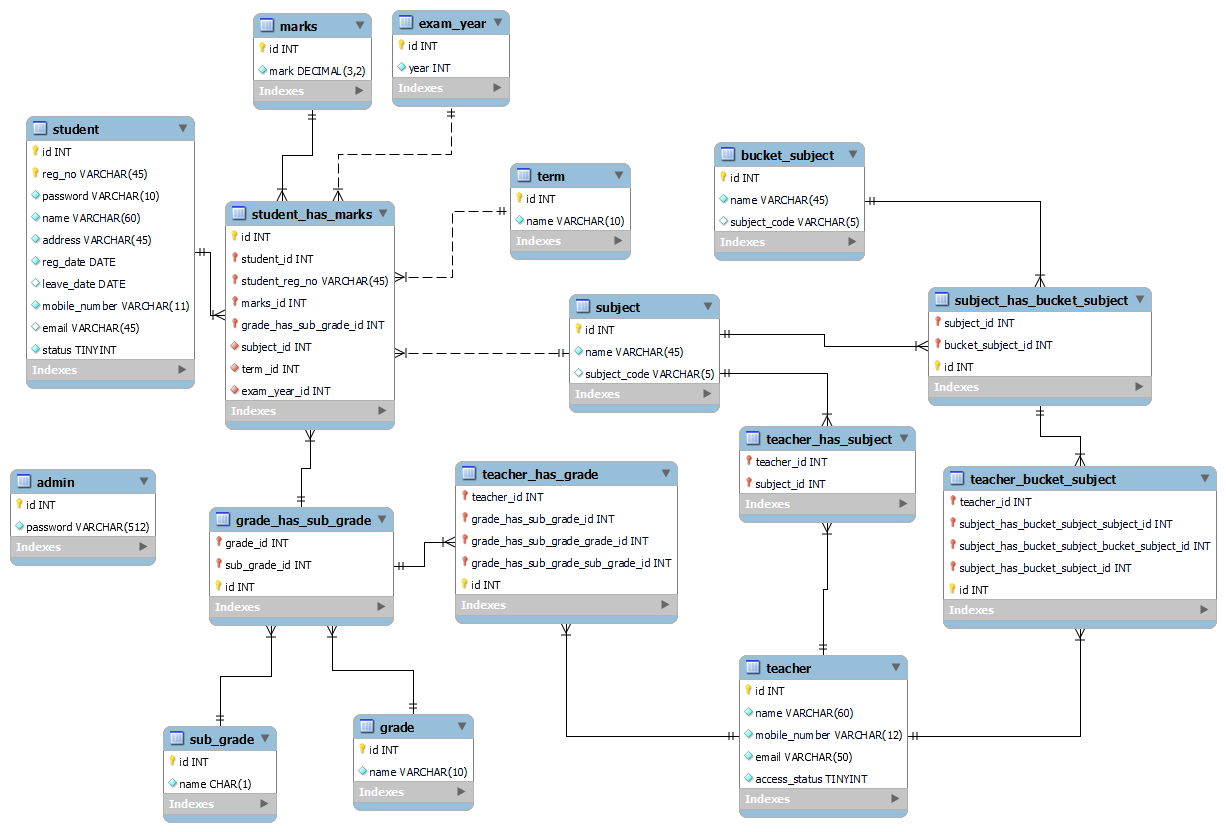
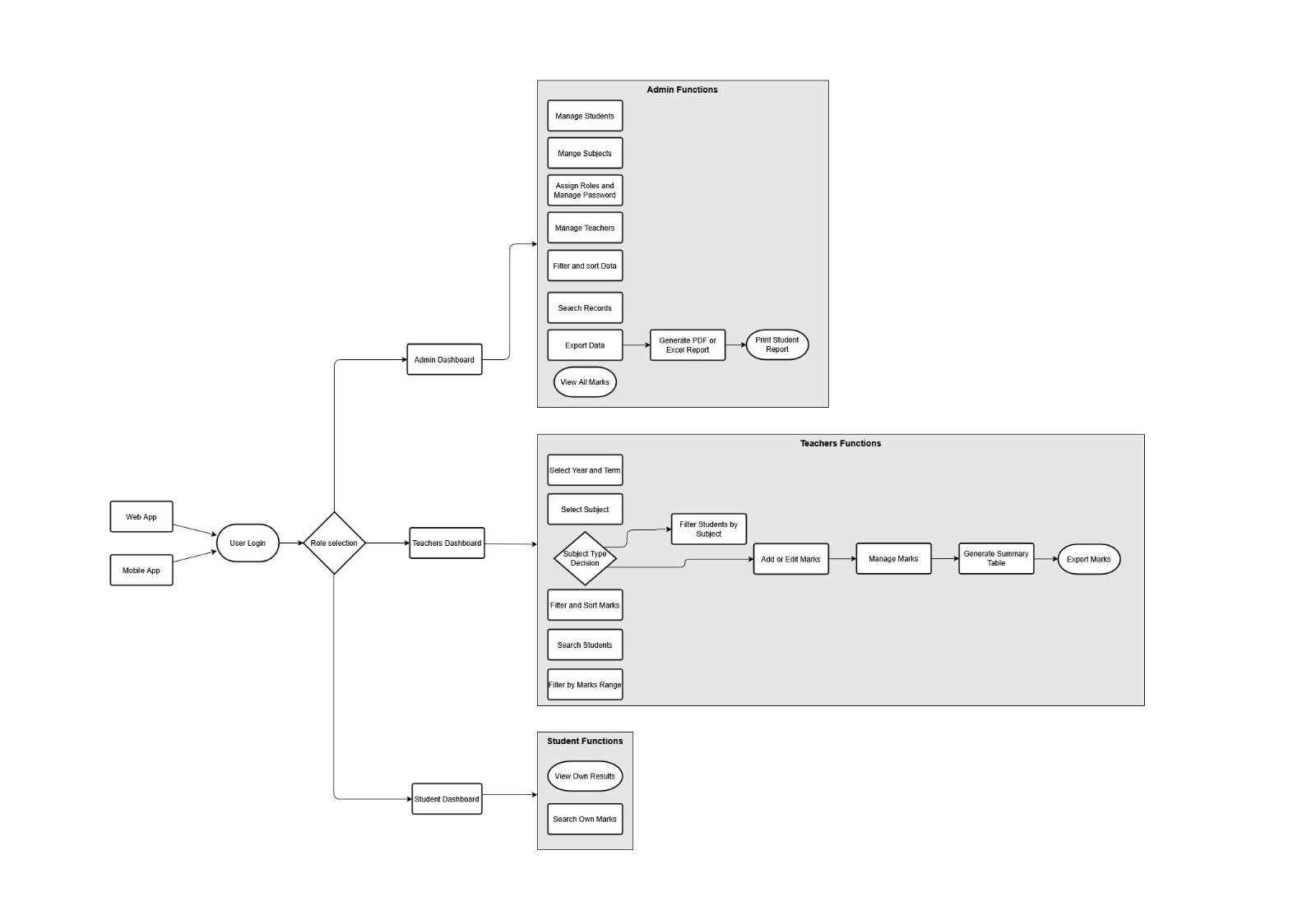
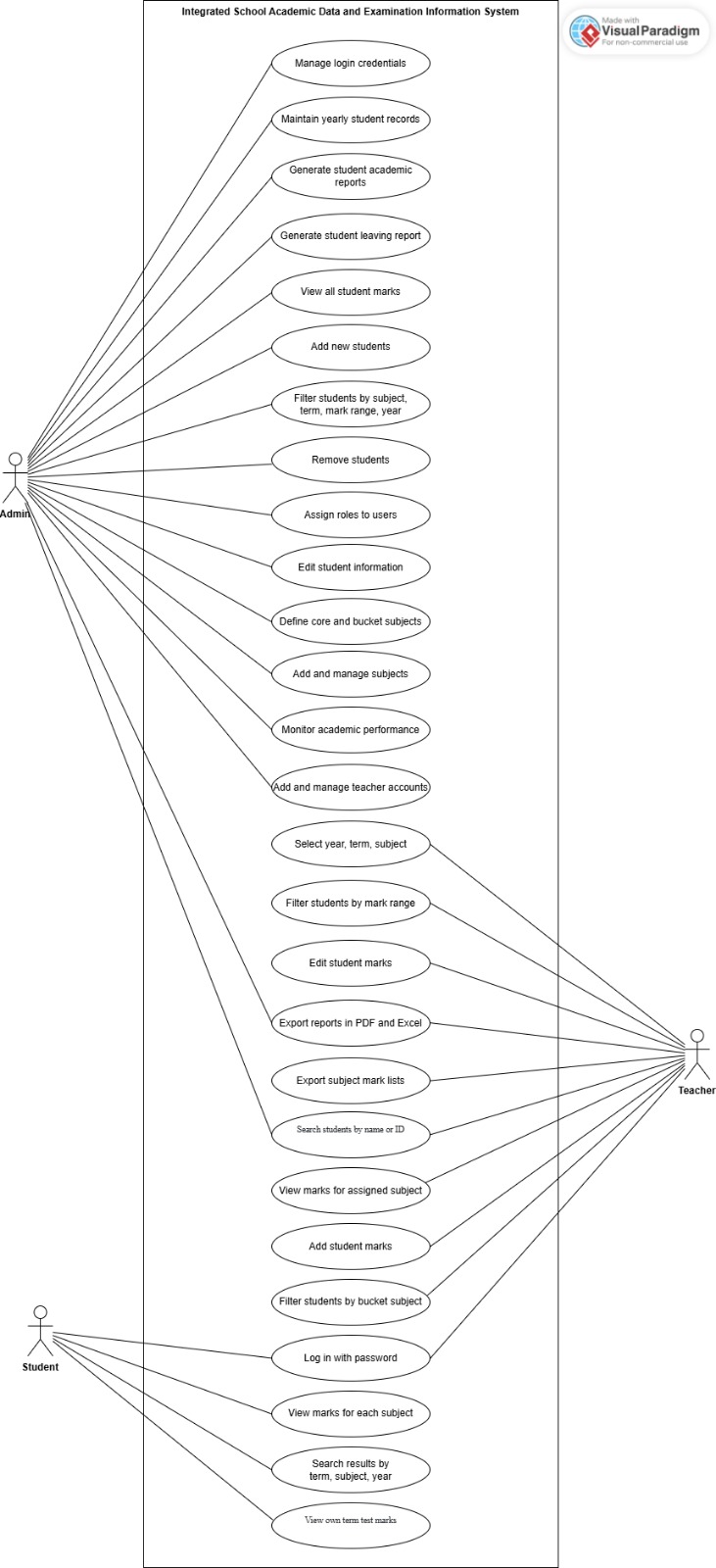
Comprehensive technical diagrams documenting the system design and data relationships.
Enhanced Entity-Relationship Diagram — Database structure showing entities and their relationships.
System Flow Chart — The complete user journey from login through role-based functionality.
Use Case Diagram — Illustrating system interactions between Admin, Teacher, Student, and Parent actors.
Enhanced Entity-Relationship Diagram — Database structure showing entities and their relationships.
System Flow Chart — The complete user journey from login through role-based functionality.
Comprehensive testing strategy ensuring reliability, security, and performance at every level.
Individual component testing ensuring each module functions correctly in isolation.
Testing interactions between modules, API endpoints, and database operations together.
JWT validation, role-based access verification, SQL injection prevention, and data encryption checks.
A structured development approach following agile methodology with weekly sprints.
Defined system requirements and created the Software Requirement Specification (SRS). Conducted research, identified functional and non-functional requirements, and finalized the overall system structure.
Designed the complete user interface using Figma. Created wireframes, prototypes, and finalized the design system for consistency across all screens.
Set up the mobile application and backend environment. Configured project structure, navigation, and essential libraries. Started basic UI development.
Developed main application features including login, dashboard, and core screens. Implemented frontend UI and started backend API development.
Integrated frontend with backend APIs. Improved application functionality, handled data flow, and continued feature enhancements.
Performed debugging, UI improvements, and overall system optimization. Ensured application stability, consistency, and prepared final documentation.
Requirements gathering, stakeholder interviews, technology evaluation, and project scope definition.
Database design, system architecture, UI/UX wireframes, use case diagrams, and API specification.
ASP.NET Core API development, database implementation, JWT authentication, and core business logic.
React Native mobile app development, UI implementation, API integration, and notification system.
Unit testing, integration testing, security testing, performance optimization, and bug fixing.
Final deployment, user documentation, portfolio creation, and project presentation preparation.
Leveraging open-source and free-tier tools to minimize project costs while maintaining quality.
| Item | Tool / Service | Cost (LKR) | Status |
|---|---|---|---|
| Development IDE | Visual Studio Code | Free | Free |
| Backend Framework | ASP.NET Core | Free | Free |
| Mobile Framework | React Native | Free | Free |
| Database | MySQL Community | Free | Free |
| Version Control | GitHub | Free | Free |
| API Testing | Postman | Free | Free |
| Hosting (Testing) | Local Development | Free | Free |
| Total Project Cost | LKR 0 | Minimal | |
Regular meetings with the school client and supervisor to ensure project alignment and progress.
Discussed project requirements, school needs, and expected deliverables with the academy staff.
Reviewed detailed requirements, user roles, and system modules with supervisor feedback.
Demonstrated current progress including working API, mobile app screens, and testing results.
Discussed project requirements, school needs, and expected deliverables with the academy staff.
Reviewed detailed requirements, user roles, and system modules with supervisor feedback.
Demonstrated current progress including working API, mobile app screens, and testing results.
Replace placeholder images with actual meeting screenshots (Zoom
calls, WhatsApp chats, in-person meetings). Place images in
/images/meetings/ folder.
Dedicated team members committed to delivering a high-quality academic management solution.
member1@email.com
member2@email.com
member3@email.com
member4@email.com
member5@email.com
Replace placeholder avatars with team member profile photos. Place
images in /images/team/ folder and update
src attributes.